

How to Choose Between a Hotel and a Serviced Apartment in London
Choosing between serviced apartments vs hotels in London comes down to one question: what kind of stay are you planning? For a single night or a quick city visit, a hotel is perfectly fine. But for anything longer, or if you’re travelling with family, working on a project assignment, or simply want more space and flexibility, a serviced apartment usually makes more sense.
This guide explains the key differences, covers the practical trade-offs, and helps you decide which option suits your trip.
The short answer: Serviced apartments offer more space, a kitchen, and greater flexibility, making them the better option for stays of a week or more, business travellers, and families. Hotels work well for short visits where convenience and on-demand service are the priority.
What Is a Serviced Apartment?
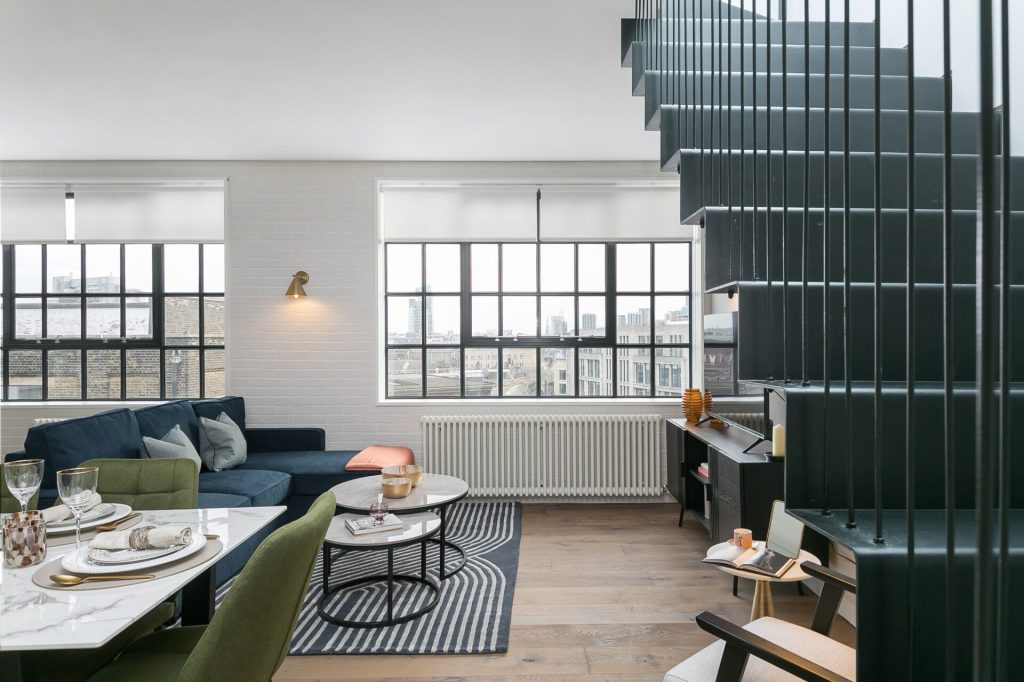
A serviced apartment is a self-contained, fully furnished flat that you rent for a short or extended period. Unlike a hotel room, it includes a separate living area, a fully equipped kitchen, and enough space to live and work comfortably without feeling confined to a single room.
Most serviced apartments come with weekly housekeeping rather than daily cleaning, in-unit or on-site laundry, and all utilities included. The feel is more residential than a hotel, which is part of the appeal for guests staying longer than a few nights.
Aparthotels sit somewhere in between. They combine apartment-style units with hotel-style services such as 24-hour reception, on-site staff, and communal amenities. They’re a good option if you want the self-contained nature of an apartment but still appreciate a front desk and hotel-style support.
| Feature | Hotel | Serviced Apartment |
|---|---|---|
| Space | Typically 25–35 sqm (bedroom + bathroom) | Often 40–80 sqm with separate living area |
| Kitchen | None (minibar only, or room service) | Fully equipped kitchen or kitchenette |
| Living area | Usually none | Separate lounge and dining space |
| Housekeeping | Daily | Weekly (or on request) |
| Laundry | Send out (charged) | In-unit or on-site washing facilities |
| Privacy | Corridor access, shared spaces | More residential and self-contained |
| Cost: short stay (1–2 nights) | Often competitive | Can be higher per night |
| Cost: longer stay (7+ nights) | Adds up quickly with meals and extras | More economical overall |
| Best suited for | Short trips, city breaks, one-off nights | Week-plus stays, families, business travel |
| Suitability for families | Limited (small rooms, no kitchen) | High (space, kitchen, laundry) |
Space: The Biggest Practical Difference
This is where serviced apartments have a clear advantage. A standard London hotel room typically offers around 25 to 35 square metres, which is enough for one night but can feel cramped over a week. Serviced apartments generally offer 30 to 50 per cent more space, with a layout that includes a separate bedroom, a living room, and a kitchen.
For business travellers, this means you can work at a proper desk, take video calls without sitting on a hotel bed, and wind down in a separate room in the evening. For families, it means children and adults aren’t sharing one small space for the duration of the trip.
Which Is More Cost-Effective?
The honest answer is: it depends on the length of your stay.
For one or two nights, a hotel can be very competitive, especially if you’re not eating in and don’t need kitchen facilities. But as the stay gets longer, the cost picture shifts.
A typical week-long stay in a serviced apartment works out around 15 per cent cheaper than an equivalent hotel once you factor in meals, laundry and other add-ons. For stays of 90 days or more, that saving can reach 40 per cent.
The reason is straightforward. In a serviced apartment, you can cook your own meals, do your own laundry, and avoid the daily parking, minibar, and service charges that accumulate in hotels. London is an expensive city for eating out, so even a few home-cooked meals per week makes a noticeable difference.
It’s also worth noting that serviced apartments offer more square metres per pound. A one-bedroom serviced apartment in central London at a similar nightly rate to a hotel room will almost always be larger and better equipped.

Serviced Apartments for Business Travellers
London’s serviced apartment sector is strongly driven by corporate demand. Project assignments, secondments, and relocation stays are common use cases, and it’s easy to see why.
A professional spending two to six weeks in London on a work project needs somewhere they can genuinely live, not just sleep. Having a proper kitchen, a dedicated workspace, and space to separate work and rest makes a real difference to productivity and wellbeing.
For companies managing staff travel, serviced apartments are also more cost-effective than hotels for extended stays. Multiple team members can be placed in adjacent units within the same building, and the ability to cook and work on-site reduces the incidental expenses that come with hotel living.
The numbers back this up. In 2023, London serviced apartments achieved around 81 per cent occupancy with an average daily rate of around £208, slightly ahead of the hotel sector’s 79.8 per cent occupancy and £195 average rate. That sustained demand reflects how deeply embedded serviced apartments are in the business travel market.
Serviced Apartments for Families
Travelling to London with children brings its own challenges. Hotel rooms are generally designed for one or two adults, and booking multiple rooms to accommodate a family adds up fast. A two-bedroom serviced apartment solves both the space problem and the cost problem.
Separate bedrooms mean different sleep schedules don’t cause problems. A fully equipped kitchen means you can handle breakfast, snacks, and simple meals without relying entirely on restaurants, which matters especially when travelling with young children or managing dietary needs. In-unit laundry is another practical advantage on longer trips.
For families staying five nights or more, a serviced apartment almost always makes more sense than a hotel room, or even a hotel suite.
When a Hotel Is Still the Better Option
Serviced apartments aren’t always the right answer. There are situations where a hotel makes more sense:
- Short stays: You’re staying for one or two nights and just need somewhere clean and convenient.
- Hotel services matter: You want on-demand room service, a concierge, a spa, or a restaurant within the building.
- Event convenience: You’re attending an event and the hotel is right next door to the venue.
- Fully managed stay: You prefer daily housekeeping and a traditional hotel experience.
Hotels are well optimised for short, single-purpose visits. If you’re flying in for a meeting and flying out the next day, a hotel is the simpler and often cheaper option.
That said, for anything longer than three nights, or if you’re travelling with others, the case for a serviced apartment starts to get strong.

Finding the Right Serviced Apartment in London
London has a wide range of serviced apartments across different areas and price points, from economy studios in outer zones to luxury three-bedroom apartments in Kensington and Knightsbridge. The city remains the most active market in the UK for serviced apartment supply, with strong demand from both corporate and leisure guests.
London Serviced Apartments works with more than 900 serviced apartment buildings across the city, offering a broad choice of options across central and greater London. The company acts as an independent intermediary, helping guests find the most suitable accommodation based on their location, budget, and length of stay. The service is free for guests and covers everything from initial enquiry through to booking confirmation.
Whether you’re looking for a short-term base near the City of London, a family-friendly apartment in a quieter residential area, or long-stay accommodation for a corporate relocation, working with a specialist makes the search significantly easier.
Frequently Asked Questions
How many nights do you need to stay in a serviced apartment for it to be worth it?
Most guests find serviced apartments make sense for stays of four nights or more. The longer the stay, the more the cost and lifestyle advantages add up.
Are serviced apartments more expensive than hotels in London?
The nightly rate can sometimes be similar or slightly higher, but the total cost is usually lower for longer stays once you factor in savings on meals, laundry and other extras. For a week-long stay, a serviced apartment often works out notably cheaper.
What is the difference between a serviced apartment and an aparthotel?
A serviced apartment is typically a self-contained flat with weekly housekeeping and minimal on-site services. An aparthotel operates more like a hotel, with 24-hour reception and shared amenities, but the units still include kitchens and separate living areas.
Can I book a serviced apartment in London for just a few nights?
Yes, most serviced apartments in London accept bookings from a minimum of two to three nights, though some buildings have longer minimum stay requirements. Aparthotels often accept single-night stays.
Do serviced apartments in London include Wi-Fi and utilities?
Most serviced apartments include Wi-Fi, all utilities, and weekly cleaning in the quoted price. It is worth confirming what is included when you book, but all-in pricing is the norm rather than the exception.
Which Is Right for Your Stay?
If you’re staying in London for more than a few nights, a serviced apartment will almost certainly give you more space, more flexibility, and better overall value than a hotel room at a similar price point. The longer the stay, the stronger the case becomes.
Hotels are great for short visits where simplicity and on-site service matter most. But for business travel, family trips, relocation stays, and anything more than a quick overnight, a serviced apartment is the more practical and cost-effective choice.
If you’re planning a stay in London and want help finding the right option, London Serviced Apartments can search across hundreds of buildings to find something that suits your location, budget, and length of stay. Get in touch to discuss what you need.
Infographic: Hotels vs Serviced Apartments
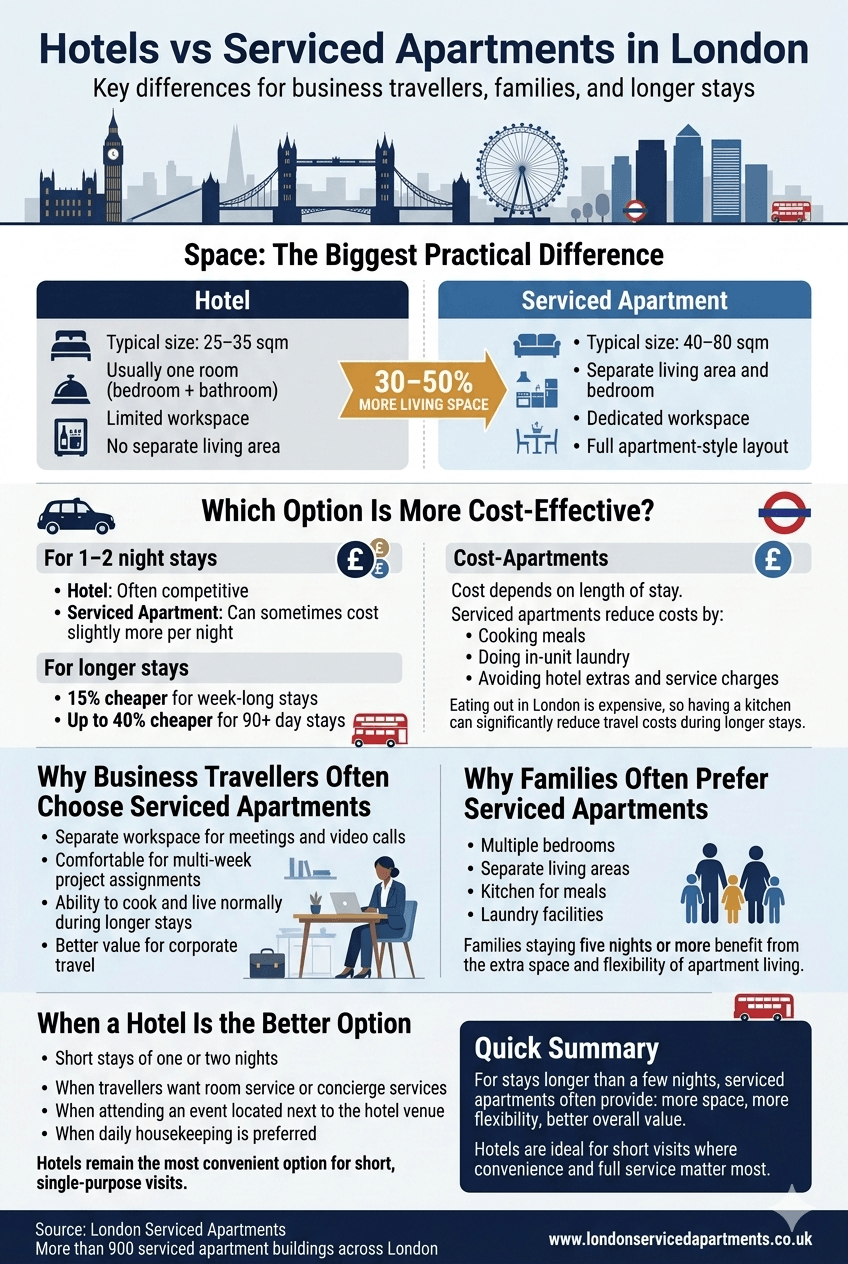
This infographic summarises the key differences between hotels and serviced apartments in London, including space, cost, facilities and which option is best for different types of travellers.
Share or reference this infographic
You are welcome to reference or share this infographic with attribution to London Serviced Apartments.
Source: London Serviced Apartments