
If you are planning a trip to London and wondering what serviced accommodation is, you have probably come across the term while researching places to stay. You may also have seen it described as serviced apartments or aparthotels, and it is not always obvious what the difference is, or whether it suits your particular trip.
This guide explains what serviced accommodation is, what it typically includes, and how to work out whether it is the right choice for your stay in London.
The short answer: Serviced accommodation is a fully furnished apartment available for short or long stays, with utilities, Wi-Fi and regular housekeeping included in the rate. It offers more space and flexibility than a standard hotel room, and tends to work particularly well for stays of several nights or longer.

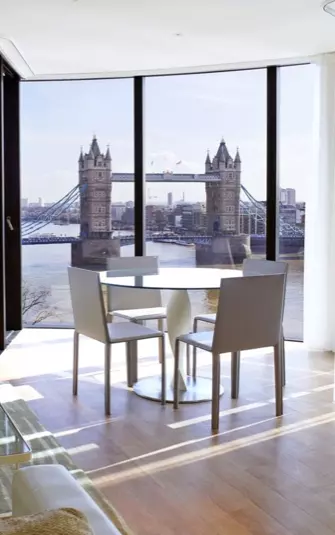
Serviced apartment in Be King Street, Covent Garden
What Is Serviced Accommodation?
Serviced accommodation varies, but in most cases it is a type of fully furnished accommodation that combines the space and flexibility of a private apartment with services such as housekeeping, utilities and Wi-Fi. It is a fully furnished apartment rented on a short or long-term basis. Unlike a standard rental, you are not taking on a tenancy agreement or managing utility bills. You pay a single nightly or weekly rate that covers the accommodation and the services that come with it.
The term covers a range of property types. Some serviced apartments are in dedicated apartment buildings with no shared facilities beyond the entrance. Others are in aparthotels, which operate more like hotels and may include a reception desk, a gym, a restaurant, or other communal spaces. Both fall under the broader definition of serviced accommodation.
The minimum stay varies. Some properties accept single-night bookings. Many prefer a minimum of three nights, particularly in central London. Others are designed specifically for extended stays of several weeks or months.
What Is Usually Included?
Most serviced accommodation in London includes the following as standard:
- A fully furnished apartment with separate living, sleeping and in many cases dining areas.
- A kitchen or kitchenette with a hob, microwave, fridge and basic cookware. Full kitchens are more common in apartments designed for longer stays.
- Housekeeping on either a daily or weekly basis, depending on the property.
- Utilities and Wi-Fi included in the rate.
- Laundry facilities, either within the apartment or in a communal laundry room.
- Television and general living comforts comparable to a furnished home.
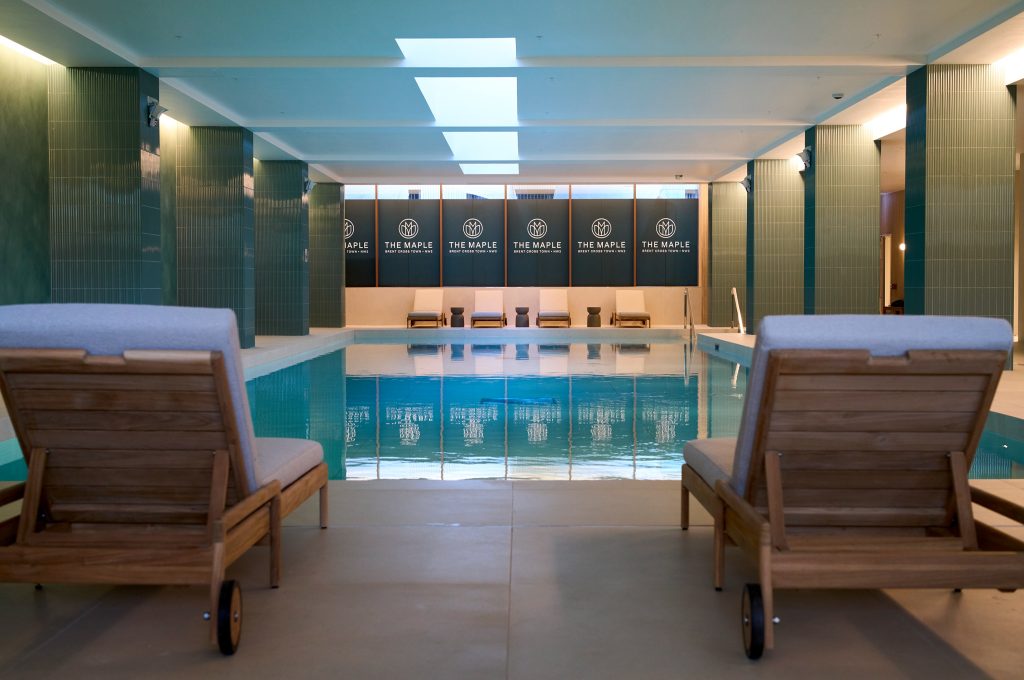
What is not always included: a 24-hour reception desk, a restaurant, room service, a concierge, or a gym. Whether these matter depends on your trip. If full hotel services are important to you, an aparthotel is more likely to offer them than a standalone serviced apartment building.
It is worth reading the inclusions carefully before booking, because the term serviced accommodation covers a wide spectrum. Not every property offers the same level of service.

What Does ‘Serviced’ Actually Mean?
The word serviced is where a lot of the confusion arises. It does not mean the same thing as a full hotel service. What it refers to, in practical terms, is that the accommodation comes with regular housekeeping and that bills and utilities are managed for you.
In a standard rental property, you would arrange your own cleaning, set up utility accounts, and handle your own internet connection. In serviced accommodation, all of that is included. You arrive, settle in, and leave the administrative side to the property.
The level of service varies considerably between properties. Daily housekeeping and a staffed reception are more common in aparthotels. Weekly housekeeping and a less formal arrival process are more typical in apartment buildings. Neither is necessarily better. It depends on what kind of stay you are looking for.
How Does Serviced Accommodation Differ From a Hotel?
The most straightforward difference is space. A serviced apartment gives you a separate living area, a kitchen and in most cases a proper bedroom, rather than a single room that has to serve all purposes at once.
For a one-night stay, that extra space may not matter much. For a week or longer, it starts to matter quite a lot. Having somewhere to sit and work that is not the end of the bed, being able to cook a simple meal rather than eating out every night, and having enough room to put your things away properly all change how comfortable a longer stay feels.
The other practical difference is cost over time. Hotels tend to be priced per night, and that per-night rate does not usually fall much as the stay gets longer. Serviced apartment rates often decrease for longer bookings, and because you can cook, do laundry and manage your own schedule, the day-to-day costs of the trip tend to be lower.
The trade-off is that hotels offer things serviced apartments generally do not: 24-hour room service, an on-site restaurant, a concierge, and the convenience of handing everything over to someone else. For short visits where full service matters, a hotel will often be the better choice.


Why Do People Choose Serviced Accommodation in London?
Different guests come to serviced accommodation for different reasons, but the common thread is usually that the trip does not fit neatly into a standard hotel room.
Business travellers
A project assignment or an extended period of work in London looks different from a two-night conference trip. Business travellers on longer stays often find that the combination of a proper workspace, a reliable Wi-Fi connection, a kitchen for early mornings and late evenings, and space to decompress after a long day makes a serviced apartment considerably more practical than a hotel room.
Location tends to matter more than people initially expect. Someone with daily meetings in Canary Wharf has very different practical requirements from someone working around the City, Victoria or Mayfair. Saving twenty or thirty minutes on a daily commute adds up quickly over two or three weeks, and that often influences the accommodation decision more than the size of the apartment itself.
The ability to keep a routine, manage your own food and laundry, and have somewhere that feels like a base rather than a temporary room tends to matter more as the stay lengthens.
Families visiting London
A family of four in a single hotel room is manageable for one night. Over a week, it starts to feel very cramped. Two hotel rooms solve the space problem but roughly double the accommodation cost.
A two-bedroom apartment gives the family proper space, separate rooms for adults and children, and a kitchen for breakfasts and snacks. The savings on meals across a week, combined with the avoided cost of a second hotel room, often make a family apartment considerably more cost-effective than it initially appears.
London is also more tiring than many families anticipate. A full day around South Kensington, Hyde Park or the South Bank involves a lot of walking and travelling, and by the evening the practical advantages of having a proper living area and separate bedrooms become more obvious than they seemed at the booking stage. Hotel facilities that looked appealing in advance can feel less relevant once the main priority is somewhere comfortable and quiet to recharge.
People relocating to London
Someone moving to London who has not yet found permanent housing needs somewhere to stay for weeks or months while they search. Serviced accommodation works well for this: it is available on flexible terms, it feels more like a home than a hotel, and it does not require a long tenancy commitment before you know which part of the city you actually want to live in.
Many people relocating to London arrive with a clear idea of which area they want to be in, and find that view shifts once they have spent time actually travelling around the city. Being in flexible accommodation during that period is more useful than it might sound at the outset.
Contractors and project workers
Professionals on fixed-term contracts in London often find serviced apartments more practical than hotels for stays of several weeks or more. The lower nightly rate for longer bookings, combined with reduced spending on restaurants and the ability to maintain a proper routine, usually makes the economics work comfortably in their favour.
Contractors also tend to pay closer attention to commute time than other guests. When you are travelling to the same site every day, the distance between your accommodation and the project location has a real daily cost in time and energy. It is often worth being closer to the work rather than to the parts of the city that look most convenient on a general map.
International visitors staying for a week or more
For visitors coming from abroad on extended trips, serviced accommodation offers a more settled base than a hotel. Having space to unpack properly, keep food in, and come back to somewhere that feels like a temporary home makes a longer visit considerably more comfortable.
Why Location Matters More Than Distance in London
One of the most common mistakes people make when booking accommodation in London is choosing a property based on how close it is to a particular landmark, rather than how well connected it is to everything else they plan to do.
London is a large city and a short distance on a map does not always translate to a short journey. A flat two minutes from one attraction might be poorly connected to the other places on the itinerary, or it might sit at the end of a line that requires two changes during busy periods. Meanwhile, a property that looks further away on a map might sit on a direct tube line that makes the whole city far more accessible.
The more useful question is not ‘how close is this to the place I want to visit most?’ but ‘how easy is it to get around from here?’
For business travellers, the priority is usually proximity to the office or event venue, with a check on what else is accessible from the same location. For families, a good connection to central attractions tends to matter more than being physically next door to any one of them. For relocation stays, access to multiple parts of the city is often more useful than being closest to any single area.
Think About Your Daily Routine, Not Just the Apartment
One thing that often gets underweighted during the booking process is how accommodation affects the day-to-day rhythm of the trip, rather than just the nights.
Visitors who spend most of their time in one part of the city tend to have a straightforward decision: find good accommodation nearby and the rest follows. But most longer stays in London involve moving around. A business trip might include meetings in the City one day, a client in Paddington the next, and a dinner in Soho in the evening. A family holiday might take in South Kensington one day, the South Bank the next, and a day trip from King’s Cross by the end of the week.
In those situations, the question is not which area has the best apartments. It is which area puts you on the right lines to get where you need to go without losing an hour each day to the journey. Areas with good connections across multiple lines, such as Victoria, Paddington or King’s Cross, often serve mixed itineraries better than areas that are closer to one specific destination but harder to travel from in different directions.
Paddington and King’s Cross are also worth flagging for guests with onward travel in mind. Both connect to Heathrow or major rail routes out of London, which matters if the trip involves other destinations before or after the London stay.
The practical advice we give most often is to map out two or three typical days before choosing an area, rather than optimising for a single journey. For most guests, that exercise changes the shortlist.
What Should You Check Before Booking?
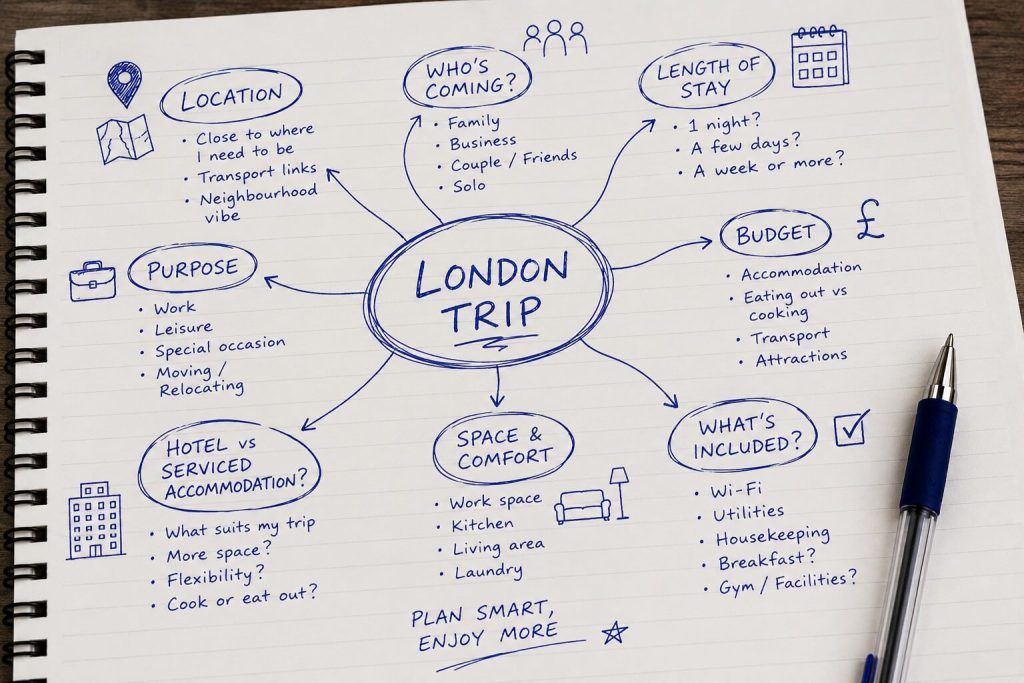
Not every serviced apartment is the same, and the details that catch people out are usually the ones they did not think to ask about in advance.
Housekeeping schedule
Daily housekeeping is standard in aparthotels. In standalone apartment buildings, weekly housekeeping is more common. If you expect fresh towels every day, check what the property actually offers rather than assuming.
Kitchen facilities
A full kitchen and a kitchenette are not the same thing. A kitchenette typically includes a microwave, a small hob and a mini-fridge. A full kitchen includes an oven, more counter space and proper cooking facilities. If cooking properly during your stay matters to you, confirm what the property actually has.
Laundry facilities
Most serviced apartments include either an in-unit washing machine or access to a shared laundry room. For longer stays, this is worth confirming, particularly if you are travelling light and intending to do laundry during the trip.
Workspace and Wi-Fi
A business traveller working remotely needs a reliable broadband connection and a proper desk or table to work from. Both are worth confirming specifically, particularly if the work involves video calls or large file transfers.
Check-in arrangements
Some serviced apartments have staffed receptions with standard check-in hours. Others use key boxes or code entry, which can be arranged around your arrival time. If you are arriving late or early, confirm the arrangement in advance.
Length-of-stay requirements
Many properties have minimum stay requirements, particularly in central London. Some will not accept bookings shorter than three nights. If you need flexibility, confirm this before booking rather than discovering it at the point of payment.
Common Misconceptions About Serviced Accommodation
The most widespread misconception is that serviced accommodation always includes the same services as a full hotel. It does not. The word serviced refers to housekeeping and managed utilities, not to room service, a concierge or an on-site restaurant. Those facilities exist in some properties, particularly aparthotels, but they are not universal.
A second common misunderstanding is that all serviced apartments are expensive. The nightly rate can look higher than a budget hotel when you see it in isolation. But when you account for reduced meal costs, laundry savings, and the avoided cost of booking two hotel rooms for a family or a group, the overall cost of the stay often compares well.
A third one worth mentioning: location. Not every well-located apartment in London needs to be in Zone 1. Some of the most practical locations for getting around the city are in Zone 2, on direct tube lines that make the whole network more accessible. A property in Zone 2 on a fast, frequent line can put you in the centre of the city in a reasonable amount of time and give you a quieter, more comfortable base at a lower nightly rate. Zone 1 addresses sometimes come with higher prices, more tourist traffic, and properties that are not necessarily easier to live in for a week.


Frequently Asked Questions
Is serviced accommodation the same as a serviced apartment?
Broadly yes. Serviced accommodation is the umbrella term; serviced apartments and aparthotels both fall within it. An aparthotel typically offers more hotel-style facilities such as a reception desk and communal areas, while a serviced apartment building is usually more residential in feel.
Is housekeeping included?
In most cases, yes. The frequency varies. Aparthotels often offer daily housekeeping. Serviced apartment buildings more commonly provide weekly cleaning with fresh linen and towels. Check the specific property’s schedule before booking.
Can families stay in serviced accommodation?
Yes, and it often suits families particularly well. Many properties offer two or three bedroom apartments and can arrange cots, high chairs and extra bedding on request. The separate bedrooms and kitchen facilities tend to make longer family visits considerably more practical than a hotel room.
Is serviced accommodation cheaper than a hotel?
It depends on the length of stay and the type of trip. For a single night, a hotel may well be cheaper and simpler. For stays of a week or longer, or for groups and families who would otherwise need multiple hotel rooms, serviced accommodation is often more cost-effective, particularly once you factor in meals and other day-to-day costs.
How long can you stay in serviced accommodation?
Stays can range from a single night to several months. Many properties have minimum stay requirements of between one and three nights. Extended stays of several weeks or months are also common, particularly for relocation clients and project-based workers.
Are bills included in the price?
Yes. Utilities, Wi-Fi and council tax are typically included in the rate. This is one of the practical advantages over a standard rental, where you would need to set up and manage those accounts yourself.
Can I extend my stay?
Usually, subject to availability. It is always worth flagging at the time of booking if there is a chance you may need to extend, as this gives the property time to hold the apartment rather than taking another booking for the same dates.
Final Thoughts
Serviced accommodation works well when the trip genuinely calls for more than a standard hotel room. That usually means a longer stay, a larger group, a working visit, or a trip where having a proper base matters more than having room service available.
It works less well for one-night stops or trips where full hotel services are a priority. Knowing which category your stay falls into will help you make the right call without overthinking it.
If you are trying to work out whether serviced accommodation would suit your particular trip to London, London Serviced Apartments can help. We work with more than 900 apartment buildings across the city and can point you towards options that fit your location, length of stay and budget.
Enquire with London Serviced Apartments to find accommodation that fits your London stay.