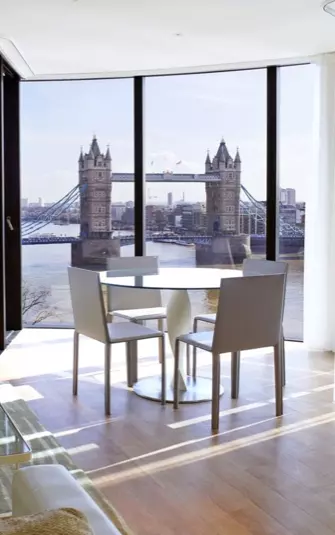

Why does a two-bedroom serviced apartment in Kensington cost around £250 a night, while another two-bedroom apartment a few streets away, in the same postcode, comes in at well over £400? Both are described in similar terms: same number of bedrooms, same general area, same broad category of stay. It’s tempting to assume one is a bargain and the other overpriced, but that’s rarely what’s actually going on.
The truth is that several things are happening at once. Location plays a part, but so does the specific building, the size and layout of the apartment, what’s included in the rate, how much demand there is on a given night, and how far ahead you book. Once you understand how these combine, a price stops looking random and starts looking like information you can actually use.
It’s rarely just one thing
It’s tempting to put a big price difference down to a single cause, usually location. “It’s in Kensington, so of course it’s expensive.”
In reality, location is only ever part of the answer. Two serviced apartments a few doors apart can be priced very differently because one has just been refurbished and the other hasn’t, because one includes daily housekeeping and a staffed reception and the other doesn’t, or simply because one is being booked six weeks out and the other for tomorrow night.
The rest of this article works through those layers in turn: location, the apartment itself, and the timing of the booking. We work with more than 900 apartment buildings across London, so quotes like these land on our desks every day, and the goal here isn’t to turn you into a pricing analyst. It’s to help you recognise good value when you see it, and know what’s actually worth asking about.
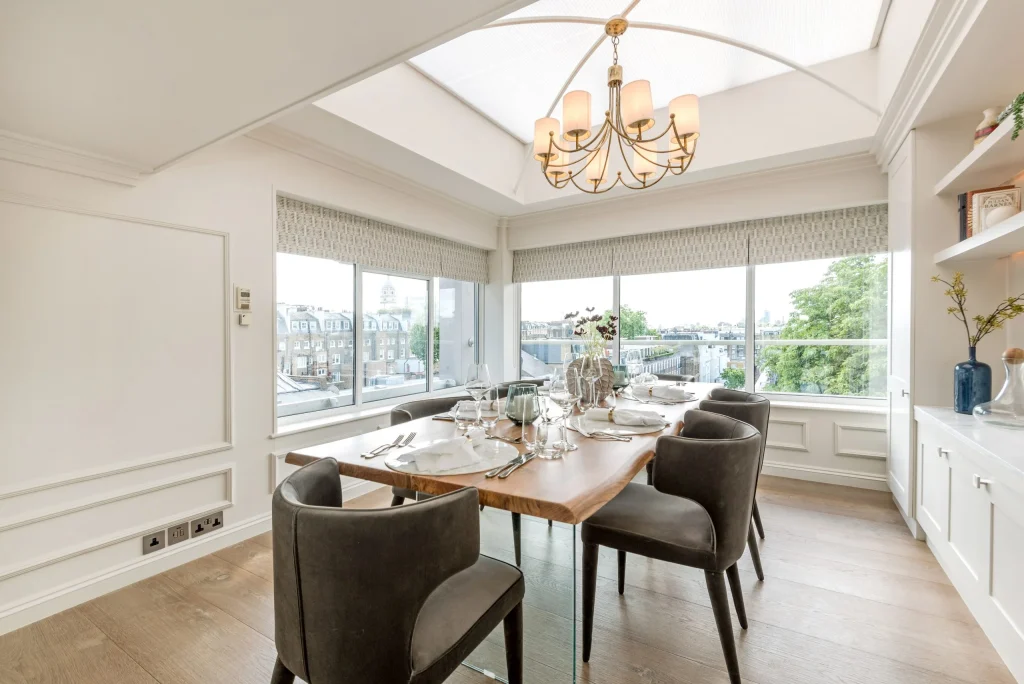
Location: what it does and doesn’t explain
Some parts of London reliably cost more than others, but “more popular” is a lazy explanation. What’s really going on usually comes down to the kind of traveller an area attracts and how well connected it is.
Westminster is a good example. It draws government and business travellers during the week and a steady flow of tourism around Buckingham Palace, Westminster Abbey and Parliament at weekends and on public holidays. That mix keeps demand fairly level across the whole week, which supports consistently strong pricing.
Canary Wharf works differently. It’s built around one industry: finance. Hotel occupancy data for the area shows just how sharply demand can drop once the working week ends, with weekend rates falling well below midweek levels. A serviced apartment there can be excellent value on a Friday or Saturday night and considerably more expensive on a Tuesday, purely because of who’s travelling and when, not because the apartment itself has changed.
Certain types of apartment are also simply rarer in central London. Two-bedroom apartments with two full bathrooms, for instance, are in short supply across Zone 1, and that scarcity shows up in the price whenever you find one, whichever postcode it happens to be in.
The exact street matters too, even once you’ve settled on an area. Two one-bedroom apartments from the same provider, both in Westminster and identical in size and specification, make the point well. One, near Victoria, is priced at £180 a night. The other, a short walk away near Vincent Square, is priced at £199, about 10% more for what is otherwise the same apartment.
| Building / area | Apartment type | Nightly rate |
|---|---|---|
| Near Victoria (Westrovia) | One bed, one bath | £180* |
| Near Vincent Square | One bed, one bath | £199* |
| Near Victoria (Westrovia) | Two bed, one bath | £239* |
| Near Vincent Square | Two bed, one bath | £260* |
Same provider, same borough, same specification. The exact building still moves the price by around 10%.
Nothing about the borough changed, only the building and its immediate surroundings did. It’s a small gap, but a useful reminder that the apartment itself deserves just as much attention as the postcode.
* Example prices correct at the time of publishing this article.
Property: why two apartments on the same street can be priced differently
Picture two apartments listed almost identically: same postcode, same bedroom count, similar-sounding descriptions. This is usually where the biggest gaps hide, because “the same” listing on paper rarely means the same experience in practice.
Serviced apartment quality is often judged against criteria close to the star-grading used across the wider serviced accommodation industry: the condition and consistency of the kitchen, bathroom and living areas, how well the building is managed, and how often it’s cleaned. A recently refurbished apartment in a well-maintained building will typically outscore an older, tireder one on every count, even with an identical floor plan.
Size matters too, but not quite in the way most people assume. Two apartments both listed as “two-bedroom” can differ substantially in actual usable space, and a bigger number on its own doesn’t tell you much without knowing the layout. A boxy two-bedroom with a cramped galley kitchen and a windowless second bedroom is a very different proposition to a similarly sized apartment with an open-plan living area, good daylight and a proper family bathroom.
Ceiling height, the number of bathrooms, and whether bedrooms look onto a street or an internal courtyard all shape how comfortable an apartment feels to actually live in. None of that shows up if you’re only comparing bedroom counts.
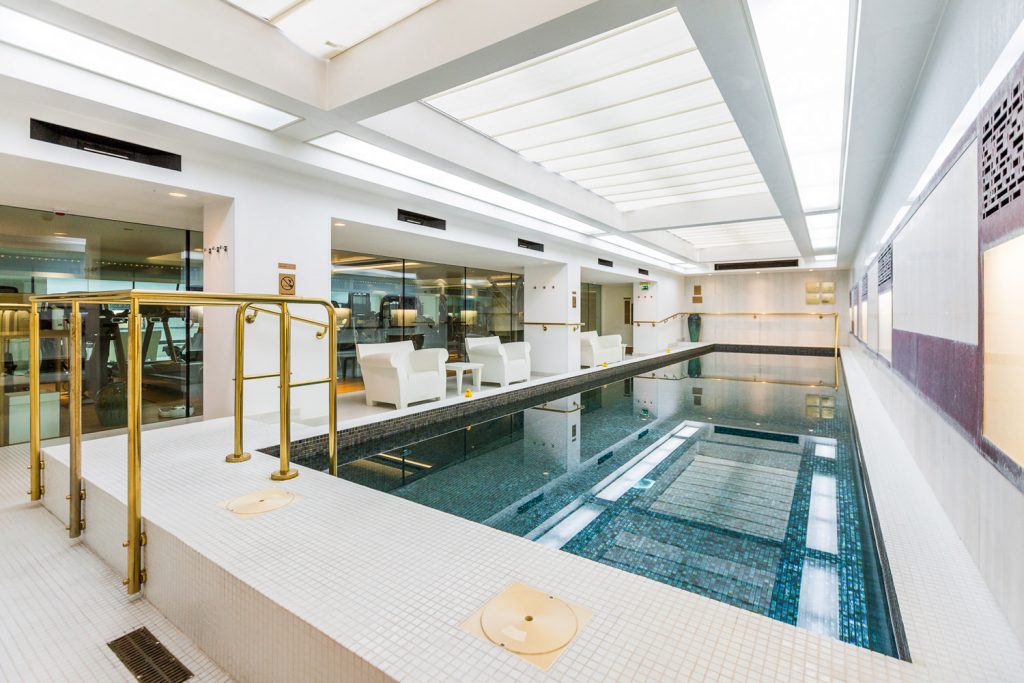
Furnishings and finish make a real difference as well. Interior-designed apartments with air conditioning, higher-spec furnishings and reliable Wi-Fi cost more to provide, and that shows up in the rate. So does a genuine private garden, secure parking, a gym or a staffed reception, all of which carry ongoing value for the building that get reflected in the nightly price.
Group and family bookings add another layer worth watching for. A “two-bedroom” apartment with a sofa bed in the living room can comfortably sleep more people than one without, which is one more reason two listings with an identical bedroom count aren’t always comparable if you’re travelling as a group.
This is close to the gap we opened with. One Kensington provider’s two-bedroom apartments, for example, range from roughly £250 to £450 a night within the same broad area. At the top of that range sit buildings with a private communal garden, secure underground parking and a staffed reception, features that are genuinely scarce in that postcode. At the lower end are self-contained apartments on quiet residential streets without any of that. Similar bedroom counts, but not really the same product.
| Factor | Value-tier example | Premium-tier example |
|---|---|---|
| Building condition | Older stock, functional finish | Recently refurbished, well maintained |
| Reception & access | Keybox or self check-in | Staffed 24-hour reception |
| Housekeeping | On request, or not included | Daily or several times a week |
| Outdoor space | None | Private garden or terrace |
| Parking | Not available | Secure on-site parking |
| Furnishings | Functional, standard fit-out | Interior-designed, air conditioned |
This is the kind of comparison our specialists make for every apartment in our network, so you don’t have to work through it listing by listing.
The service that comes with an apartment matters just as much as the apartment itself. Daily housekeeping, linen changes and a real person on reception all cost the operator money to provide, so a rate that includes them will always look higher than one that doesn’t, even for an identical floor plan.

Market and timing: when you book changes what you pay
Even the same apartment can carry a different price tag depending purely on when you’re looking to stay.
Major events squeeze prices because the supply of apartments in an area doesn’t change while demand briefly spikes. Wimbledon fortnight is a clear example: rates in the surrounding area typically climb through the tournament, with the busiest weekend days seeing the sharpest jumps. Serviced apartments nearby follow a similar pattern, and the same happens around major conferences and exhibitions at short notice.
Booking further ahead generally helps, and staying longer nearly always brings the nightly rate down. Providers commonly discount stays of a week or more, with the saving growing the longer you stay, often around 10% for a handful of nights and considerably more for a month or beyond. Some of that is a straightforward volume discount, since turnover and cleaning costs fall for longer bookings. Part of it isn’t a discount at all.
It isn’t always a straight line from booking early to paying less, though. Occasionally a late booking picks up a genuine discount if a provider is trying to fill an apartment that would otherwise sit empty on that date. It’s the exception rather than something worth planning around, but it explains why a last-minute search sometimes turns up a surprisingly good rate.
A tax rule most people don’t know about
For the first 28 nights of a stay, standard 20% VAT applies to the full rate. From night 29 onwards, VAT only applies to the portion of the charge treated as covering services like housekeeping, and by default that’s set at a minimum of 20% of the remaining charge.
In practice, that brings the effective VAT rate on long stays down to around 4%. It’s a genuine HMRC rule, not a loyalty perk, and it’s one of the reasons month-long stays can look surprisingly good value.
Booking flexibility comes with its own trade-off. A discounted, non-refundable rate can look like the smart choice, but it shifts the financial risk onto you. If your plans change and you can’t stay, that saving disappears along with your money. Flexible rates cost more for exactly that reason: the operator is taking on the risk instead of you.
Recognising genuine value, not just the lowest price
Once you start looking at location, the building and timing together, a pattern usually emerges: the lowest headline rate isn’t always the best deal.
A cheaper apartment without a proper kitchen or washing machine can leave you paying for laundry and takeaways that a slightly pricier, better-equipped apartment would have covered. A fully serviced apartment that bundles in utility bills and Wi-Fi can work out cheaper overall than a private rental that looks less expensive per night but charges extra for everything else. For a family or a small group, one two-bedroom apartment with two proper bathrooms can be far better value than two separate hotel rooms, even at a higher nightly rate.
This is really what makes booking a serviced apartment different from booking a hotel room. You’re weighing up location, space, service and flexibility all at once, and getting that balance right takes a bit of judgement.
This is exactly the kind of judgement our team makes every day. Rather than spending hours working through listings, floor plans and rate terms across dozens of buildings, you can simply tell us what matters most for your stay, whether that’s budget, a particular part of London, travelling with family, working while you’re here, parking, air conditioning, accessibility, or how long you’ll be staying, and we’ll match you to an apartment from our network of more than 900 buildings that offers genuine value for what you actually need.
Frequently asked questions
The bottom line
Serviced apartment prices in London vary because location, the building itself and the timing of your booking are all doing something different to the rate at the same time. None of them tells the whole story on its own.
If you’d rather not untangle all of that yourself, that’s exactly what we’re here for. Tell us what you need and we’ll find you an apartment that offers genuine value for your stay, not just the cheapest one on the page.